
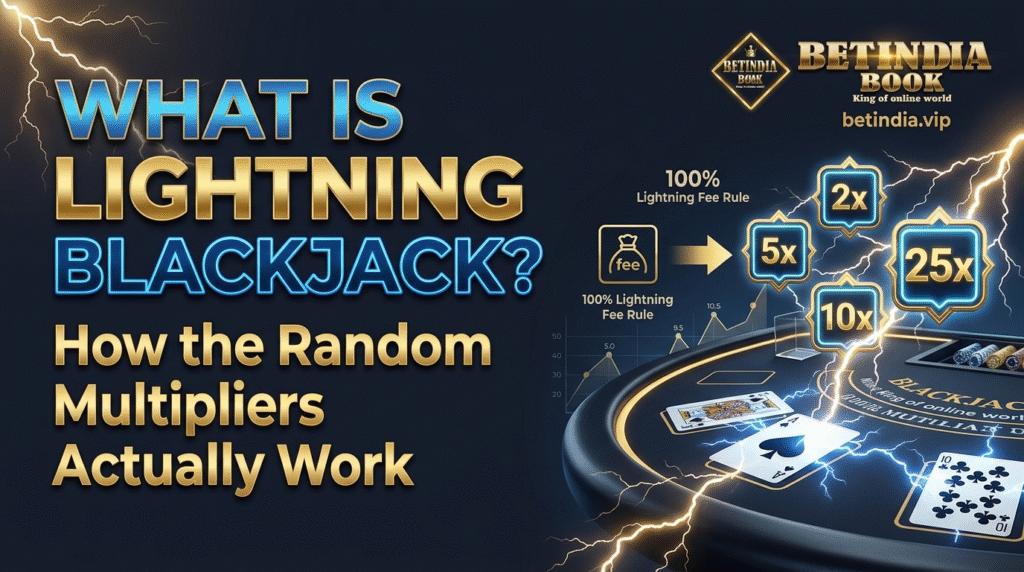
Lightning Blackjack is standard blackjack — same hand values, same hit/stand/double/split decisions — with one addition: an optional side fee that unlocks a random multiplier on your next winning hand. Lightning blackjack explained simply means understanding two things layered on top of ordinary blackjack: the fee you pay for the chance at a multiplier, and how that multiplier actually gets applied once you win.
The Base Game Is Just Blackjack
Nothing about the core rules changes. Eight decks are used, the dealer stands on soft 17, blackjack pays 3 to 2, and you can double on any first two cards and split once. If you’ve played standard blackjack before, you already know how to play every hand — the multiplier system sits entirely on top of that.
How the Lightning Fee and Multiplier Actually Work
Alongside your main bet, you can pay a Lightning Fee, typically equal to your main bet amount. This fee doesn’t change how the current hand plays out — it’s what makes you eligible for a random multiplier if you win. Win a hand, and a multiplier (anywhere from 2x up to a possible 25x) gets assigned for your next winning hand specifically, not the one you just won.
A Worked Example
● You bet $500 as your main wager, plus a $500 Lightning Fee. Total staked: $1,000.
● If it’s a push (tie with the dealer): your $500 main bet is returned, but the $500 fee is lost. Net result: -$500.
● If the dealer wins: both the main bet and the fee are lost. Net result: -1,000.
● If you win with no multiplier active: you get your standard payout (even money, or 3:2 for a blackjack) on the main bet, and a multiplier gets assigned for your next winning hand.
● If you win while a multiplier is active (say, a 5x you earned last hand): that multiplier applies to the portion of your bet that’s covered by your current Lightning Fee — not your whole stake if you’ve changed your bet size since.
Why the Fee Genuinely Matters to Your Expected Return
This is worth being direct about, since it’s easy to gloss over: standard blackjack’s return to player sits around 99.5% under typical rules — one of the lowest house edges in any casino game. Once you factor in the Lightning Fee as part of your total stake, Lightning Blackjack’s overall return drops meaningfully, commonly cited around 82–83%. The multipliers add genuine upside, but the fee is a real, ongoing cost across every hand you play, win or lose — it’s not a free add-on.
Does Basic Strategy Still Apply?
Yes, largely. Standard blackjack basic strategy (when to hit, stand, double, or split based on your hand and the dealer’s upcard) still forms the foundation of how to play each hand well, since the underlying game hasn’t changed. Some specialist strategy guides suggest adjusting certain borderline decisions when a large multiplier is active, on the logic that a bigger multiplier changes the relative value of winning versus pushing. That’s a more advanced layer on top of basic strategy, not a replacement for it.
Is the Lightning Fee Worth Paying?
That depends on what you’re actually looking for. If you want blackjack’s lowest possible house edge, skipping the fee and playing the standard game gets you closer to that. If you want the chance at a significantly boosted payout and are comfortable with a lower overall return in exchange for that upside, the fee is doing exactly what it’s designed to do. Neither choice is wrong — they’re just different trade-offs between consistency and variance.
The Bottom Line
Lightning Blackjack is genuinely just blackjack with an optional side bet bolted on. The core skill (basic strategy) carries over directly, but the Lightning Fee is a real cost that lowers your overall return in exchange for occasional multiplier payouts. Understanding exactly how the fee and multiplier interact — especially the part where a multiplier only covers the portion of your bet matching your fee — is the difference between reading the game correctly and being surprised by a smaller-than-expected payout.
Frequently Asked Questions
Do I have to pay the Lightning Fee to play?
No, it’s typically optional. You can play the base blackjack game without it, though you won’t be eligible for the random multipliers.
What happens to my Lightning Fee if the hand is a push?
Your main bet is returned, but the Lightning Fee is lost, since a push doesn’t count as a win for multiplier purposes.
Does the multiplier apply to my whole bet if I increase my stake?No. The multiplier only applies to the portion of your bet that matches the Lightning Fee you paid — if you raise your main bet without raising the fee proportionally, only part of your winnings get the multiplier.
Is Lightning Blackjack’s return to player lower than standard blackjack?
Yes, once the Lightning Fee is factored into your total stake. Standard blackjack sits around 99.5% RTP, while Lightning Blackjack’s overall return (including the fee) is commonly cited closer to 82–83%.
Can I use normal blackjack basic strategy in Lightning Blackjack?
Yes, basic strategy still applies to the underlying hand decisions. Some advanced guides suggest minor adjustments when a large multiplier is active, but this is a refinement, not a replacement.
This article is for informational purposes only. Game outcomes are determined by chance; no strategy guarantees wins. Please set personal limits and play responsibly. 18+ only.
 Get WhatsApp ID Now